

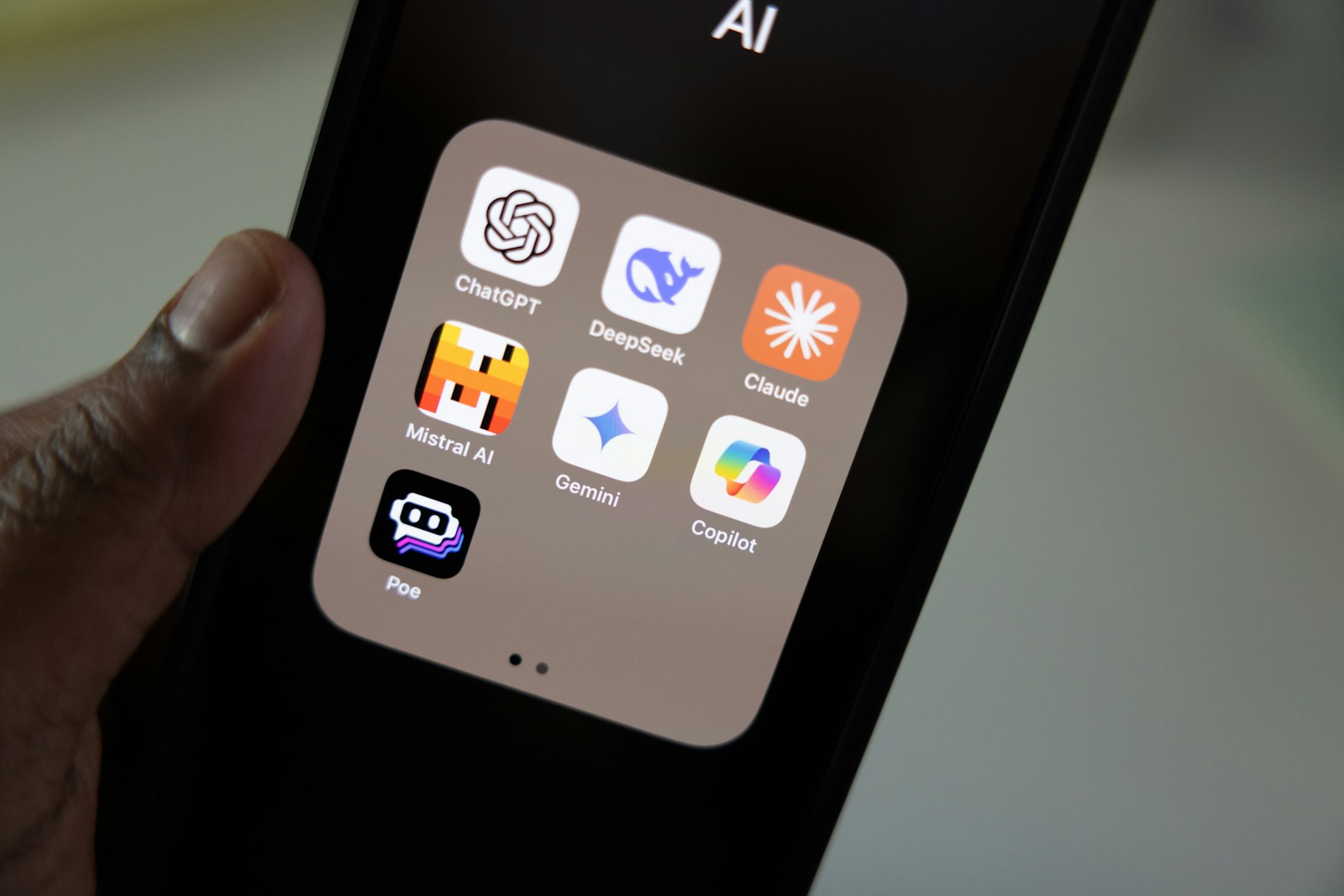
Artificial intelligence is not just another technological innovation. It represents a structural transformation of work, comparable to industrial mechanisation — with one crucial difference: this time, cognitive, analytical and managerial functions are directly affected.
For executives and HR leaders, the issue goes far beyond upgrading tools. It concerns the very foundation of the social contract within the organisation.
- A Silent Economic Shift: Growth Without Jobs
For decades, an implicit principle shaped both public policy and corporate strategy: economic growth creates jobs. The negative correlation between GDP and unemployment (Okun’s law) appeared relatively stable.
Today, that relationship is weakening. Many advanced economies are experiencing periods of growth accompanied by stagnant or even rising unemployment. Productivity gains — now accelerated by digitalisation and AI — no longer automatically translate into net job creation.
In other words, economic performance no longer guarantees job security.
This reality fundamentally alters the implicit balance between organisations and their employees. If growth no longer protects employment, organisational legitimacy can no longer rely solely on financial performance.
- What Work Used to Guarantee — and What Is Changing
Historically, employment provided three core functions:
- Economic security
- Social integration
- Professional identity
The implicit contract was clear: in exchange for time, loyalty and performance, the organisation offered stability and protection.
With AI, that balance is shifting. Job stability is being replaced by the expectation of continuous adaptability. Even highly qualified employees — managers, experts, knowledge professionals — now express concerns about their future relevance.
The social contract is gradually moving from:
“Your job is secure”
to
“Your adaptability is supported”
This shift is not neutral. It redefines organisational responsibility.
- The Risk of Technological Solutionism
AI extends a long-standing managerial focus on optimisation. Automate, accelerate, rationalise — the logic seems straightforward.
But reducing transformation to a productivity equation carries strategic risks. When AI is deployed exclusively as a cost-reduction lever:
- Internal trust erodes
- Engagement declines
- Talent mobility increases
- Employer reputation weakens
Short-term performance may improve, but long-term sustainability suffers.
The issue is not to oppose technology and humanism. It is to recognise that optimisation alone cannot define strategic direction.
- Reskilling and Upskilling: A Structural Imperative
Providing AI tool training is not enough. The real challenge is redesigning the organisation’s skills architecture.
Two distinct but complementary dynamics must be addressed:
- Upskilling: Strengthening Human–AI Complementarity
Upskilling deepens and expands existing capabilities so employees can work effectively alongside AI systems.
Key priorities include:
- Analytical and creative thinking
- Data literacy and technological understanding
- Leadership and social influence
- Resilience, curiosity and continuous learning
The goal is to increase human value in a technology-rich environment.
- Reskilling: Organising Structural Mobility
Reskilling becomes necessary when entire task clusters disappear or are fundamentally transformed.
It requires:
- Identifying partially automatable roles
- Mapping transferable competencies
- Creating internal mobility pathways
Reskilling is not merely a defensive response to disruption. It represents a structural redesign of organisational capabilities.
Importantly, this transformation exceeds the capacity of individual firms alone. No single organisation can absorb the full cost of large-scale capability renewal. The issue is systemic.
- Why Every Organisation Must Play Its Part
Many companies implicitly rely on the external labour market to provide the competencies they will need tomorrow.
This strategy is fragile.
If organisations collectively underinvest in capability development while expecting others to carry the burden, the result will be:
- Structural talent shortages
- Salary inflation for scarce profiles
- Increased dependence on external hiring
- Chronic organisational instability
The talent pool does not replenish itself automatically.
Every organisation benefits from a skilled ecosystem. Therefore, every organisation has a direct interest in contributing to its renewal. Responsibility is collective — but the consequences are individually borne.
Underinvesting today means facing structural capability gaps tomorrow.
- The Strategic Role of HR
In this context, HR cannot remain focused on administrative compliance or workforce cost control.
HR becomes the architect of the new social contract.
Its strategic priorities should include:
- Redesigning competency frameworks around adaptability
- Embedding ethical AI governance into policies
- Strengthening internal mobility systems
- Framing employability as a shared responsibility
AI transformation is fundamentally a transformation of human capabilities.
If HR remains confined to headcount optimisation, it risks becoming marginal in a transition where the central issue is precisely long-term capability investment.
- Redefining Performance
Efficiency remains necessary — but it is no longer sufficient.
In an AI-driven context, performance must be assessed across three interdependent dimensions:
- Economic viability
- Human capability development
- Social legitimacy
An organisation that optimises costs while undermining professional security and internal trust ultimately weakens its own sustainability.
Social legitimacy is not a moral abstraction. It directly affects talent attraction, engagement, regulatory exposure and long-term competitiveness.
- The New Social Contract: A Strategic Choice
AI integration is not only a technological decision. It is a legitimacy decision.
Why should employees accept organisational authority if it no longer guarantees either stability or development?
The new social contract will not emerge automatically. It must be built through:
- Visible and coherent investment in capability development
- Transparency regarding AI deployment
- Reinvestment of productivity gains into human development
The organisations that will succeed in this transition will not simply be the most technologically advanced.
They will be those that understand that, in the AI economy, competitiveness depends as much on the quality of the social contract as on the power of algorithms.
The question is not only whether to adopt AI.
The question is what kind of organisation we choose to become in a world where technology fundamentally reshapes the nature of work.
- References
Acemoglu, D., & Robinson, J. (2012). Why Nations Fail. Crown.
Brynjolfsson, E., & McAfee, A. (2014). The Second Machine Age. Norton.
Appiah, R. I. (2023). The Effects of AI-Driven Automation on Job Roles, Employment Rates, and the Future Skills Landscape across Industries. International Journal of AI, BigData, Computational and Management Studies, 4(4), 100-107.
Castel, R. (1995). Les métamorphoses de la question sociale. Fayard.
Deming, D. (2017). The growing importance of social skills in the labor market. Quarterly Journal of Economics, 132(4), 1593–1640.
Ehnert, I., et al. (2016). Reporting on sustainability and HRM. International Journal of Human Resource Management.
Hobbes, T. (1996). Leviathan (Original work published 1651).
ILO (2025). Generative AI and Jobs: A Global Analysis of Potential Effects on Job Quantity and Quality. International Labour Organization.
Polanyi, K. (1944). The Great Transformation. Beacon Press.
Rousseau, J.-J. (2012). The Social Contract (Original work published 1762).
Sennett, R. (1998). The Corrosion of Character. Norton.
Shneiderman, B. (2022). Human-Centered AI. Oxford University Press.
Sverke, M., et al. (2002). Job insecurity and its consequences. Journal of Occupational Health Psychology.
Taylor, F. W. (1911). The Principles of Scientific Management. Harper.
Teece, D. (2018). Dynamic capabilities as (workable) management systems theory. Journal of Management & Organization.
World Economic Forum (2023). Future of Jobs Report.