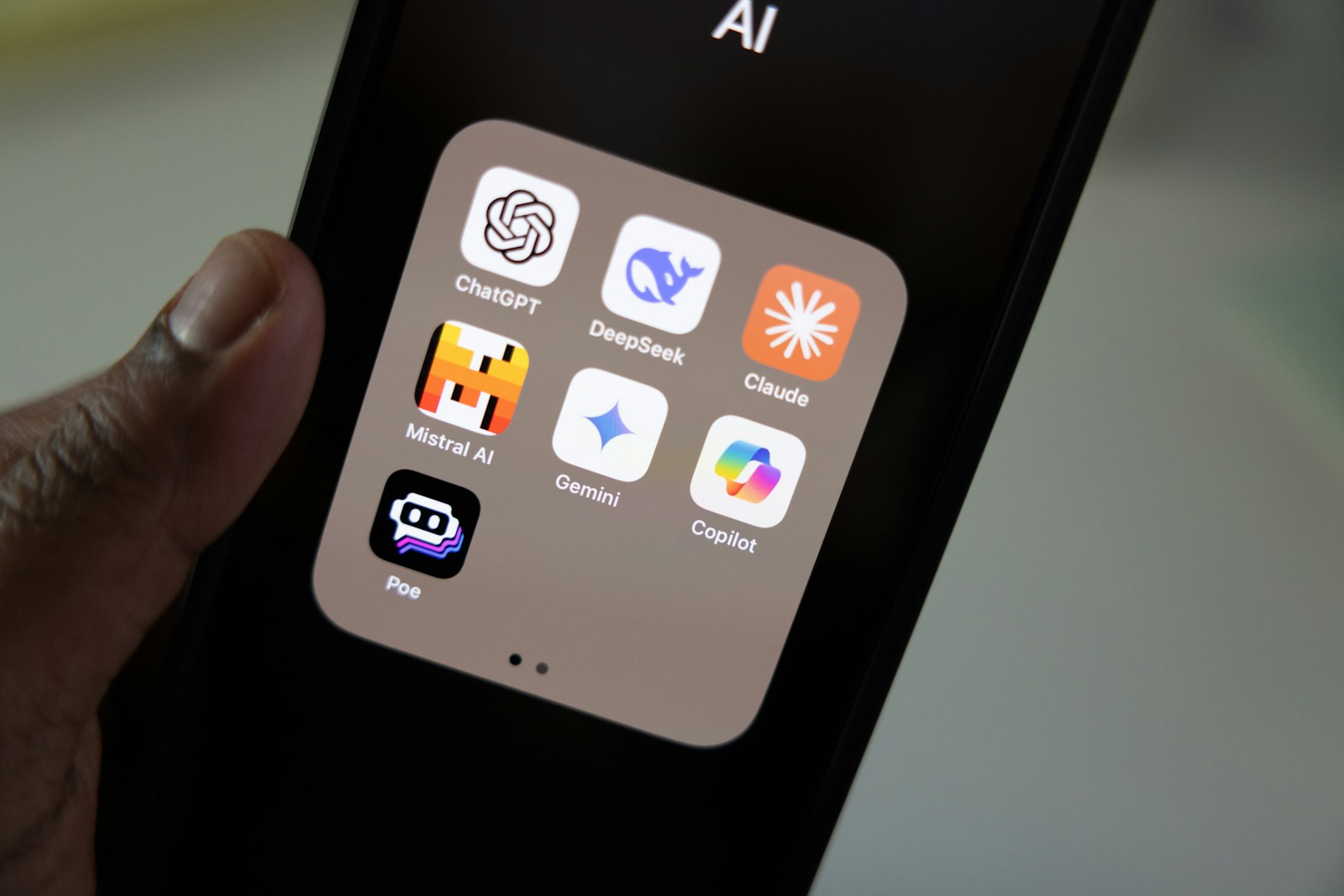


A person holding a smart phone in their hand

AI and the New Social Contract: Why Leaders Must Rethink Their Responsibility 

Artificial intelligence is not just another technological innovation. It represents a structural transformation of work, comparable to industrial mechanisation — with one crucial difference: this time, cognitive, analytical and managerial functions are directly affected. 

For executives and HR leaders, the issue goes far beyond upgrading tools. It concerns the very foundation of the social contract within the organisation. 

  1.  A Silent Economic Shift: Growth Without Jobs 

For decades, an implicit principle shaped both public policy and corporate strategy: economic growth creates jobs. The negative correlation between GDP and unemployment (Okun’s law) appeared relatively stable. 

Today, that relationship is weakening. Many advanced economies are experiencing periods of growth accompanied by stagnant or even rising unemployment. Productivity gains — now accelerated by digitalisation and AI — no longer automatically translate into net job creation. 

In other words, economic performance no longer guarantees job security. 

This reality fundamentally alters the implicit balance between organisations and their employees. If growth no longer protects employment, organisational legitimacy can no longer rely solely on financial performance. 

  1. What Work Used to Guarantee — and What Is Changing 

Historically, employment provided three core functions: 

  • Economic security 
  • Social integration 
  • Professional identity 

The implicit contract was clear: in exchange for time, loyalty and performance, the organisation offered stability and protection. 

With AI, that balance is shifting. Job stability is being replaced by the expectation of continuous adaptability. Even highly qualified employees — managers, experts, knowledge professionals — now express concerns about their future relevance. 

The social contract is gradually moving from: 

“Your job is secure” 

to 

“Your adaptability is supported” 

This shift is not neutral. It redefines organisational responsibility. 

  1. The Risk of Technological Solutionism 

AI extends a long-standing managerial focus on optimisation. Automate, accelerate, rationalise — the logic seems straightforward. 

But reducing transformation to a productivity equation carries strategic risks. When AI is deployed exclusively as a cost-reduction lever: 

  • Internal trust erodes 
  • Engagement declines 
  • Talent mobility increases 
  • Employer reputation weakens 

Short-term performance may improve, but long-term sustainability suffers. 

The issue is not to oppose technology and humanism. It is to recognise that optimisation alone cannot define strategic direction. 

  1. Reskilling and Upskilling: A Structural Imperative 

Providing AI tool training is not enough. The real challenge is redesigning the organisation’s skills architecture. 

Two distinct but complementary dynamics must be addressed: 

  1. Upskilling: Strengthening Human–AI Complementarity 

Upskilling deepens and expands existing capabilities so employees can work effectively alongside AI systems. 

Key priorities include: 

  • Analytical and creative thinking 
  • Data literacy and technological understanding 
  • Leadership and social influence 
  • Resilience, curiosity and continuous learning 

The goal is to increase human value in a technology-rich environment. 

  1. Reskilling: Organising Structural Mobility 

Reskilling becomes necessary when entire task clusters disappear or are fundamentally transformed. 

It requires: 

  • Identifying partially automatable roles 
  • Mapping transferable competencies 
  • Creating internal mobility pathways 

Reskilling is not merely a defensive response to disruption. It represents a structural redesign of organisational capabilities. 

Importantly, this transformation exceeds the capacity of individual firms alone. No single organisation can absorb the full cost of large-scale capability renewal. The issue is systemic. 

  1. Why Every Organisation Must Play Its Part 

Many companies implicitly rely on the external labour market to provide the competencies they will need tomorrow. 

This strategy is fragile. 

If organisations collectively underinvest in capability development while expecting others to carry the burden, the result will be: 

  • Structural talent shortages 
  • Salary inflation for scarce profiles 
  • Increased dependence on external hiring 
  • Chronic organisational instability 

The talent pool does not replenish itself automatically. 

Every organisation benefits from a skilled ecosystem. Therefore, every organisation has a direct interest in contributing to its renewal. Responsibility is collective — but the consequences are individually borne. 

Underinvesting today means facing structural capability gaps tomorrow. 

  1. The Strategic Role of HR 

In this context, HR cannot remain focused on administrative compliance or workforce cost control. 

HR becomes the architect of the new social contract. 

Its strategic priorities should include: 

  • Redesigning competency frameworks around adaptability 
  • Embedding ethical AI governance into policies 
  • Strengthening internal mobility systems 
  • Framing employability as a shared responsibility 

AI transformation is fundamentally a transformation of human capabilities. 

If HR remains confined to headcount optimisation, it risks becoming marginal in a transition where the central issue is precisely long-term capability investment. 

  1. Redefining Performance 

Efficiency remains necessary — but it is no longer sufficient. 

In an AI-driven context, performance must be assessed across three interdependent dimensions: 

  • Economic viability 
  • Human capability development 
  • Social legitimacy 

An organisation that optimises costs while undermining professional security and internal trust ultimately weakens its own sustainability. 

Social legitimacy is not a moral abstraction. It directly affects talent attraction, engagement, regulatory exposure and long-term competitiveness. 

  1. The New Social Contract: A Strategic Choice 

AI integration is not only a technological decision. It is a legitimacy decision. 

Why should employees accept organisational authority if it no longer guarantees either stability or development? 

The new social contract will not emerge automatically. It must be built through: 

  • Visible and coherent investment in capability development 
  • Transparency regarding AI deployment 
  • Reinvestment of productivity gains into human development 

The organisations that will succeed in this transition will not simply be the most technologically advanced. 

They will be those that understand that, in the AI economy, competitiveness depends as much on the quality of the social contract as on the power of algorithms. 

The question is not only whether to adopt AI. 

The question is what kind of organisation we choose to become in a world where technology fundamentally reshapes the nature of work. 

  1. References 

Acemoglu, D., & Robinson, J. (2012). Why Nations Fail. Crown. 
Brynjolfsson, E., & McAfee, A. (2014). The Second Machine Age. Norton. 
Appiah, R. I. (2023). The Effects of AI-Driven Automation on Job Roles, Employment Rates, and the Future Skills Landscape across IndustriesInternational Journal of AI, BigData, Computational and Management Studies, 4(4), 100-107. 

Castel, R. (1995). Les métamorphoses de la question sociale. Fayard. 
Deming, D. (2017). The growing importance of social skills in the labor market. Quarterly Journal of Economics, 132(4), 1593–1640. 
Ehnert, I., et al. (2016). Reporting on sustainability and HRM. International Journal of Human Resource Management
Hobbes, T. (1996). Leviathan (Original work published 1651). 
ILO (2025). Generative AI and Jobs: A Global Analysis of Potential Effects on Job Quantity and Quality. International Labour Organization. 
Polanyi, K. (1944). The Great Transformation. Beacon Press. 
Rousseau, J.-J. (2012). The Social Contract (Original work published 1762). 
Sennett, R. (1998). The Corrosion of Character. Norton. 
Shneiderman, B. (2022). Human-Centered AI. Oxford University Press. 
Sverke, M., et al. (2002). Job insecurity and its consequences. Journal of Occupational Health Psychology
Taylor, F. W. (1911). The Principles of Scientific Management. Harper. 
Teece, D. (2018). Dynamic capabilities as (workable) management systems theory. Journal of Management & Organization
World Economic Forum (2023). Future of Jobs Report

man standing in front of people sitting beside table with laptop computers

Social Competencies for Managers: Impact on Engagement, Performance and Well-Being

Serie on Social Competencies on the Workplace 

This article is the first in a series examining the interpersonal capabilities that shape managerial effectiveness and organisational outcomes. It begins with a broader perspective on social competencies, understood as the set of relational and self-regulatory skills that enable managers to interact effectively, build trust and structure productive working relationships. 

Managerial performance is often evaluated through operational or strategic results, yet a substantial body of research shows that interpersonal behaviour is a primary driver of employee engagement, collective performance and workplace well-being. How managers communicate, regulate emotions, handle conflict and recognise contributions directly influences motivation, cooperation and psychosocial climate. 

Within this broader framework, empathy will be addressed in the next article as a foundational but frequently misunderstood component of managerial social competence. While empathy enables accurate understanding of employees’ experiences and perspectives, its effectiveness depends on how it is integrated with other competencies such as feedback, boundary-setting and conflict management. 

  1. What social competencies include 

Managerial social competencies typically combine: 

  • Empathy and perspective-taking 
  • Emotional regulation 
  • Clear and respectful communication 
  • Active listening 
  • Conflict management 
  • Feedback and recognition practices 
  • Trust-building behaviours 
  • Social awareness and adaptability 

These competencies are not fixed personality traits. They are behavioural capabilities that can be developed through training, feedback and experience (Lopes et al., 2006). Research on leadership effectiveness consistently shows that managers’ interpersonal abilities strongly influence team functioning and outcomes (Riggio & Reichard, 2008). 

  1. Impact on staff engagement 
  1. Manager behaviour as a key engagement driver 

Employee engagement is strongly influenced by the quality of interactions with direct managers. Socially competent managers create conditions where employees feel heard, respected and fairly treated, which increases motivation and discretionary effort. 

A meta-analysis by Christian, Garza and Slaughter (2011) demonstrates that leadership behaviour and relational climate are significant predictors of work engagement. When managers communicate clearly, provide recognition and listen to concerns, employees are more likely to invest cognitively and emotionally in their work. 

  1. Psychological mechanisms 

Three mechanisms explain this relationship. 

Trust formation. Managerial social competencies such as fairness, integrity and supportive communication foster trust in leadership, which in turn predicts employee engagement and commitment (Dirk, K.T., & Ferrin, D.L., 2002 , Engelbrecht et al., 2017). Trust functions as a key psychological mechanism linking managerial behaviour to employees’ willingness to invest cognitively and emotionally in their work (Kahn, 1990).  

Psychological safety. Managers who encourage open expression and respond constructively to input create psychological safety, enabling participation and learning (Edmondson, 2002). Teams with high psychological safety show higher engagement and initiative. 

Recognition and feedback quality. Constructive feedback and recognition support employees’ needs for competence and relatedness, reinforcing intrinsic motivation and engagement (Christian et al., 2011). 

Managers showing low levels social competencies often generate the opposite effects: reduced voice, disengagement and minimal compliance. 

  1. Impact on production and performance 
  1. Team coordination and efficiency 

Performance depends not only on technical expertise but also on coordination and cooperation. Managers with strong social competencies facilitate: 

  • Clear communication of expectations 
  • Constructive conflict management 
  • Information sharing 
  • Alignment around objectives 

These behaviours reduce friction and improve execution. Emotional and social intelligence in leadership has been positively associated with job performance across roles, particularly in managerial positions (O’Boyle et al., 2011). 

  1. Decision quality and implementation 

Managers who listen effectively and communicate transparently obtain more accurate information and detect emerging issues earlier. This improves decision quality and facilitates implementation. 

Conversely, poor interpersonal management leads to information withholding, passive resistance and low commitment to decisions, undermining performance even when strategies are technically sound. 

  1. Reduction of counterproductive behaviours 

Perceived injustice and poor managerial communication are strong predictors of withdrawal behaviours, turnover intentions and counterproductive work behaviours (Colquitt et al., 2013). Socially competent managers mitigate these risks by maintaining fairness, clarity and respectful interactions, thereby stabilising productivity. 

  1. Impact on employee well-being 
  1. Manager as psychosocial risk or resource 

Managers play a central role in shaping psychosocial working conditions. Their social competencies influence stress levels, emotional exhaustion and job satisfaction. Supportive managerial behaviour functions as a protective resource, while poor interpersonal management acts as a stressor. 

A meta-analytic review by Harms et al. (2017) shows that leadership emotional intelligence is associated with lower employee stress and burnout, as well as improved well-being. 

  1. Mechanisms affecting well-being 

Emotional climate regulation. Managers influence the emotional tone of teams. Predictable, respectful interactions reduce chronic stress and interpersonal tension. 

Clarity and fairness. Unclear expectations and perceived unfairness are major sources of workplace stress. Socially competent managers provide clarity and consistent treatment. 

Support and recognition. Perceived supervisor support is strongly linked to higher well-being and lower burnout (Kurtessis et al., 2017). Employees who feel supported cope more effectively with job demands. 

Managers who lack these competencies often contribute unintentionally to stress accumulation and disengagement. 

  1. Integrating empathy within social competencies 

Empathy remains a foundational element of managerial effectiveness. As developed in the next article on empathy, it enables accurate understanding of employee experiences and appropriate emotional responses. However, empathy must be integrated with other social competencies to be effective. 

Empathy without assertiveness or feedback skills can lead to avoidance of difficult conversations. Authority without empathy leads to disengagement and tension. Effective managerial behaviour requires a balanced combination of understanding, communication and regulation. 

  1. Organisational implications 

Organisations frequently prioritise technical expertise when selecting managers, underestimating the impact of social competencies. Evidence indicates this is a structural limitation. Managerial interpersonal behaviour directly influences engagement, performance and well-being. 

Developing social competencies requires more than theoretical training. Effective approaches include behavioural feedback, coaching, practice with real managerial situations and reflection on relational impact. Organisations that systematically develop these competencies are more likely to achieve sustainable performance and healthier work environments. 

three people sitting in front of table laughing together

Empathy at Work: The Managerial Skill That Drives Engagement, Performance, and Profit 

Serie on Social Competencies on the Workplace 

Empathy is often framed as a “soft” skill. In reality, it is a strategic managerial competency with measurable impact on performance, engagement, and retention. In complex organizational environments—particularly those marked by uncertainty, change, and performance pressure—managers who demonstrate empathy create conditions that enable both individual and collective effectiveness. 

Defining empathy in a managerial context 

Empathy in management does not mean excessive emotional involvement or avoiding difficult decisions. It refers to the capacity to understand another person’s perspective, emotions, and constraints, and to integrate that understanding into decision-making and communication. 

Psychological research generally distinguishes between: 

  • Cognitive empathy: understanding another person’s perspective 
  • Affective empathy: recognizing and appropriately responding to emotions 

For managers, cognitive empathy is particularly critical. It enables them to anticipate reactions, adjust communication, and make decisions that consider both operational constraints and human impact. 

Empathy and leadership effectiveness 

Research consistently links empathy with leadership effectiveness and performance. A large-scale study by Gentry et al. (2016) at the Center for Creative Leadership1 found that managers rated as more empathetic by subordinates were also rated as better performers by their own supervisors. Empathy improves a manager’s ability to: 

  • build trust 
  • manage conflict 
  • give constructive feedback 
  • support development 
  • navigate change 

These mechanisms directly affect team performance and cohesion. 

Similarly, emotional intelligence research led by Daniel Goleman (1998)2 identified empathy as one of the core competencies distinguishing high-performing leaders from average ones. Leaders with strong social awareness are more capable of influencing, coaching, and aligning teams with organizational goals. 

Impact on psychological safety and team performance 

Empathy plays a central role in creating psychological safety—defined by Amy Edmondson (1999)3 as the shared belief that a team is safe for interpersonal risk-taking. Psychological safety allows employees to: 

  • speak up about errors 
  • share ideas 
  • challenge assumptions 
  • ask for help 

Teams with higher psychological safety demonstrate better learning behaviors and improved performance outcomes. Managers who listen actively, acknowledge concerns, and respond constructively foster this environment. 

Google’s “Project Aristotle” (2015)4, which analyzed hundreds of teams, identified psychological safety as the strongest predictor of team effectiveness. Empathetic managerial behaviors—listening, recognizing emotions, showing understanding—were among the most important drivers of that safety. 

Empathy and employee engagement 

Employee engagement is strongly influenced by the quality of the relationship with the direct manager. Gallup’s global workplace research5 consistently shows that managers account for up to 70% of the variance in team engagement. 

Empathetic managers contribute to engagement through: 

  • recognition of individual contributions 
  • understanding of workload and constraints 
  • fair and transparent communication 
  • support during personal or professional challenges 

When employees feel understood and considered, they are more likely to perceive fairness and organizational support. According to organizational support theory (Eisenberger et al., 2002)6, perceived support from supervisors increases commitment, discretionary effort, and retention. 

Conversely, lack of empathy from managers is frequently cited in exit interviews as a major factor in disengagement and turnover. 

Empathy as a conflict management and decision tool 

Managers regularly face competing priorities: performance targets, deadlines, and human constraints. Empathy improves decision quality by providing a more accurate understanding of situations. It allows managers to: 

  • identify underlying causes of performance issues 
  • adapt management style to individuals 
  • anticipate resistance to change 
  • resolve conflicts before escalation 

Developing empathy as a professional competency 

Empathy is not an innate trait reserved for a few individuals. It can be developed through targeted training and managerial practices: 

  • structured feedback training 
  • active listening exercises 
  • perspective-taking simulations 
  • coaching and supervision 
  • reflective management practices 

Programs focusing on emotional intelligence and social competencies have demonstrated measurable improvements in leadership effectiveness (Cherniss & Goleman, 2001)7. The key condition is sustained practice rather than one-off training sessions. 

Financial ROI of investing in social competencies 

Investing in the development of empathy and broader social competencies is often perceived as intangible. However, its financial impact is increasingly documented. 

Higher employee engagement correlates with improved organizational outcomes. Gallup (2020) reports that highly engaged teams show: 

  • 21% higher profitability 
  • 17% higher productivity 
  • 41% lower absenteeism 
  • 59% lower turnover in low-turnover organizations 

Since managerial behavior is the primary driver of engagement, developing empathetic leadership has a direct financial return. Reduced turnover lowers recruitment and onboarding costs. Improved engagement increases discretionary effort and reduces presenteeism. Better communication reduces costly conflicts and errors. 

From a cost–benefit perspective, investment in social competency development—particularly empathy—often yields a higher return than purely technical training because it influences multiple performance drivers simultaneously: retention, collaboration, innovation, and execution. 

Beyond its current relevance, empathy is increasingly recognized as a strategic competency for the future of management. As organizations become more complex, multicultural, and technology-driven, purely technical or hierarchical leadership models are losing effectiveness. Managers are expected to influence without constant authority, lead hybrid teams, navigate uncertainty, and sustain engagement in demanding environments. Among all social competencies—communication, collaboration, adaptability—empathy stands out as a foundational capability because it enables the effective use of all others. Without the ability to understand perspectives, anticipate reactions, and build trust, even technically strong managers struggle to mobilize teams. For this reason, many leadership frameworks now position empathy not as an optional interpersonal quality but as a core strategic skill that will be essential for sustainable performance and leadership credibility in the coming years. 

Conclusion 

Empathy is not a peripheral interpersonal quality but a core managerial competency. It strengthens leadership effectiveness, improves psychological safety, and drives employee engagement. Organizations that invest in developing empathy and broader social competencies among managers create conditions for sustained performance. 

The financial ROI of such investment is clear: more engaged employees, lower turnover, higher productivity, and stronger organizational resilience. In an environment where human capital is a primary source of competitive advantage, empathy is not optional—it is a strategic necessity.